
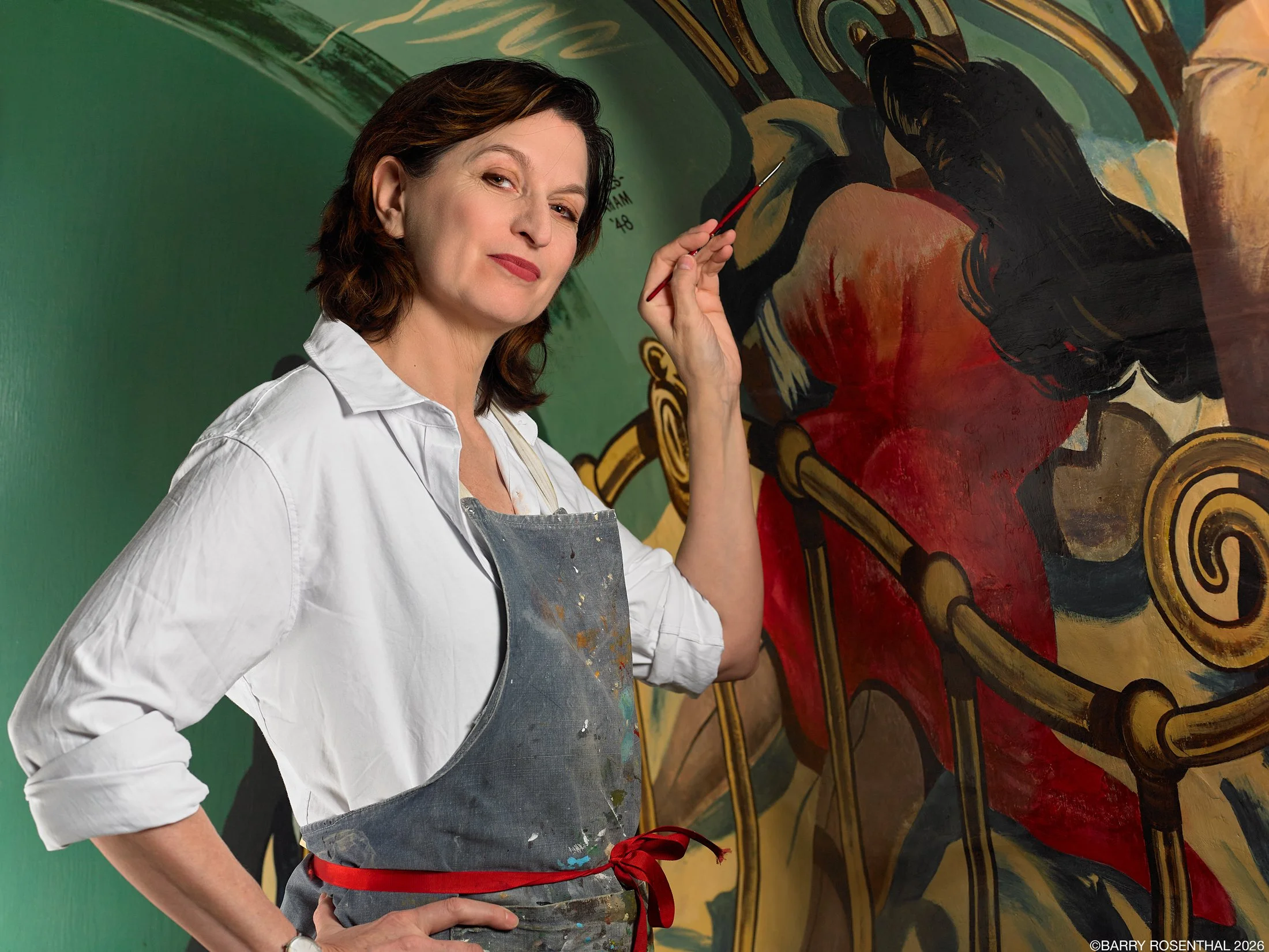
Mural restoration in progress — Minton’s Playhouse, Harlem, New York
Mural Restoration at Minton’s Playhouse, Harlem, New York
When I was approached to restore a mural in a jazz club in Harlem, it stopped me in my tracks. Even before seeing it, I sensed it was something special.
When it was described to me, I knew it was a jewel.
The Lady Sleeps, painted by Charles Graham in 1948 at Minton’s Playhouse, is part of one of New York’s most historic jazz venues—the birthplace of bebop. The mural is not simply decorative; it is the heart of the room, carrying decades of presence and memory.
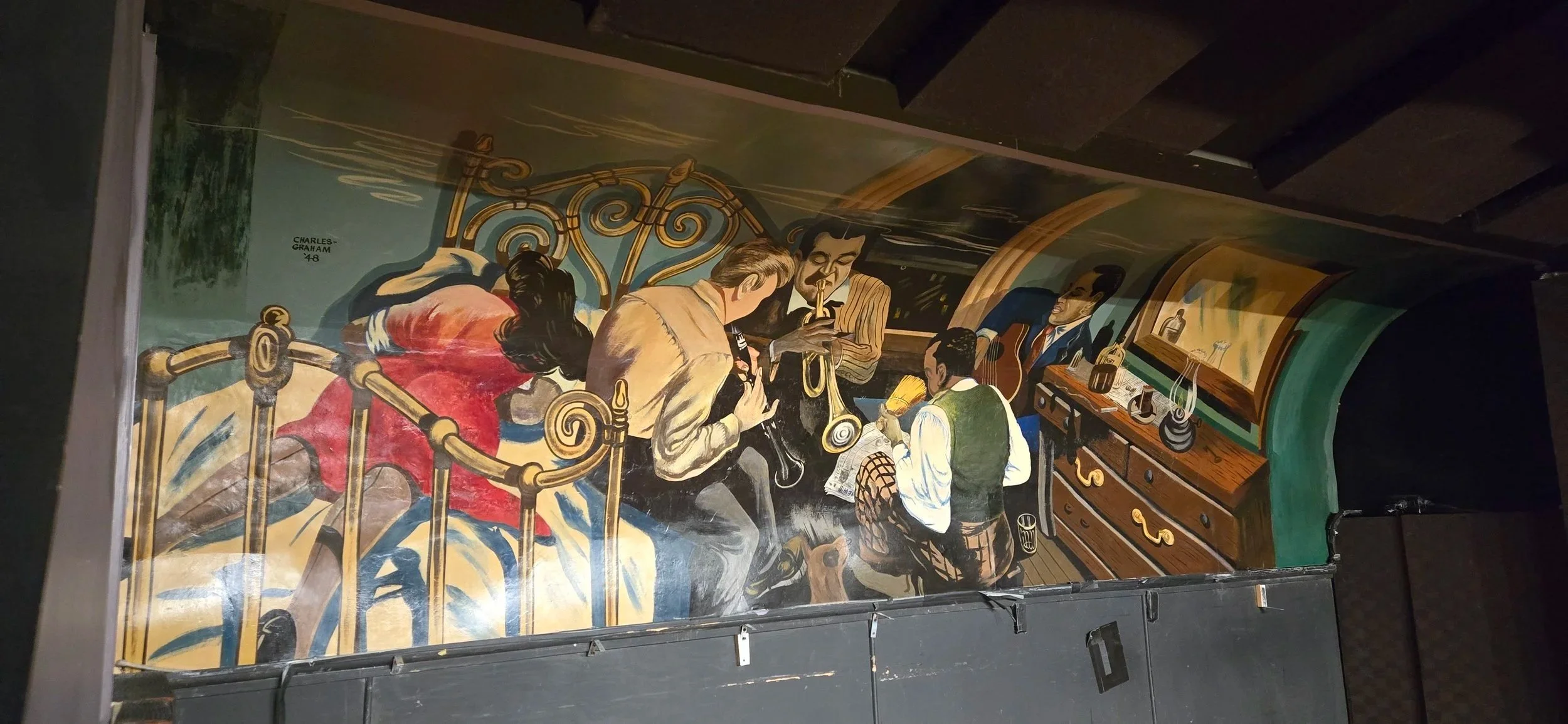
The Lady Sleeps, Charles Graham, 1948 — Minton’s Playhouse
This iconic piece, painted directly onto curved panels, has witnessed decades of music, history, and transformation within one of Harlem’s strongest cultural venues.
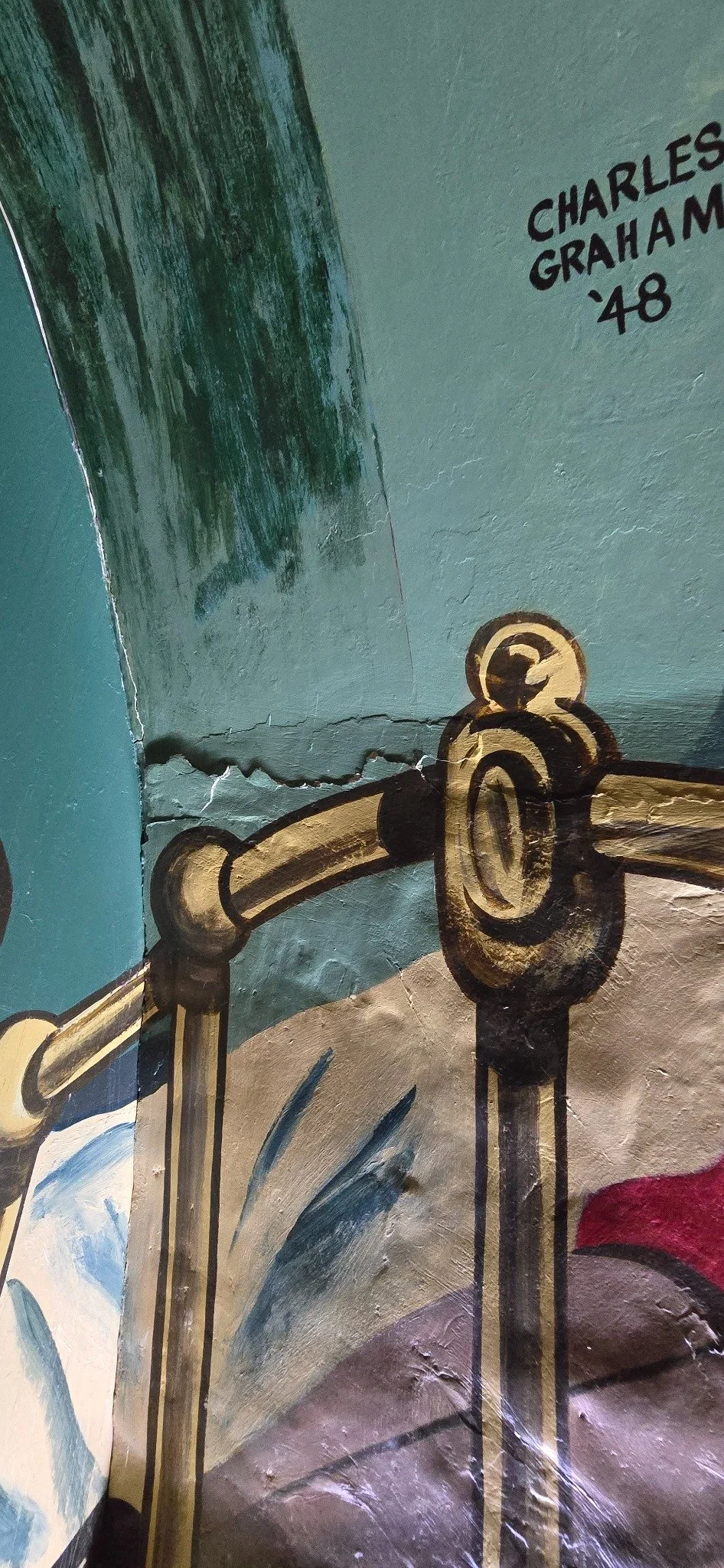
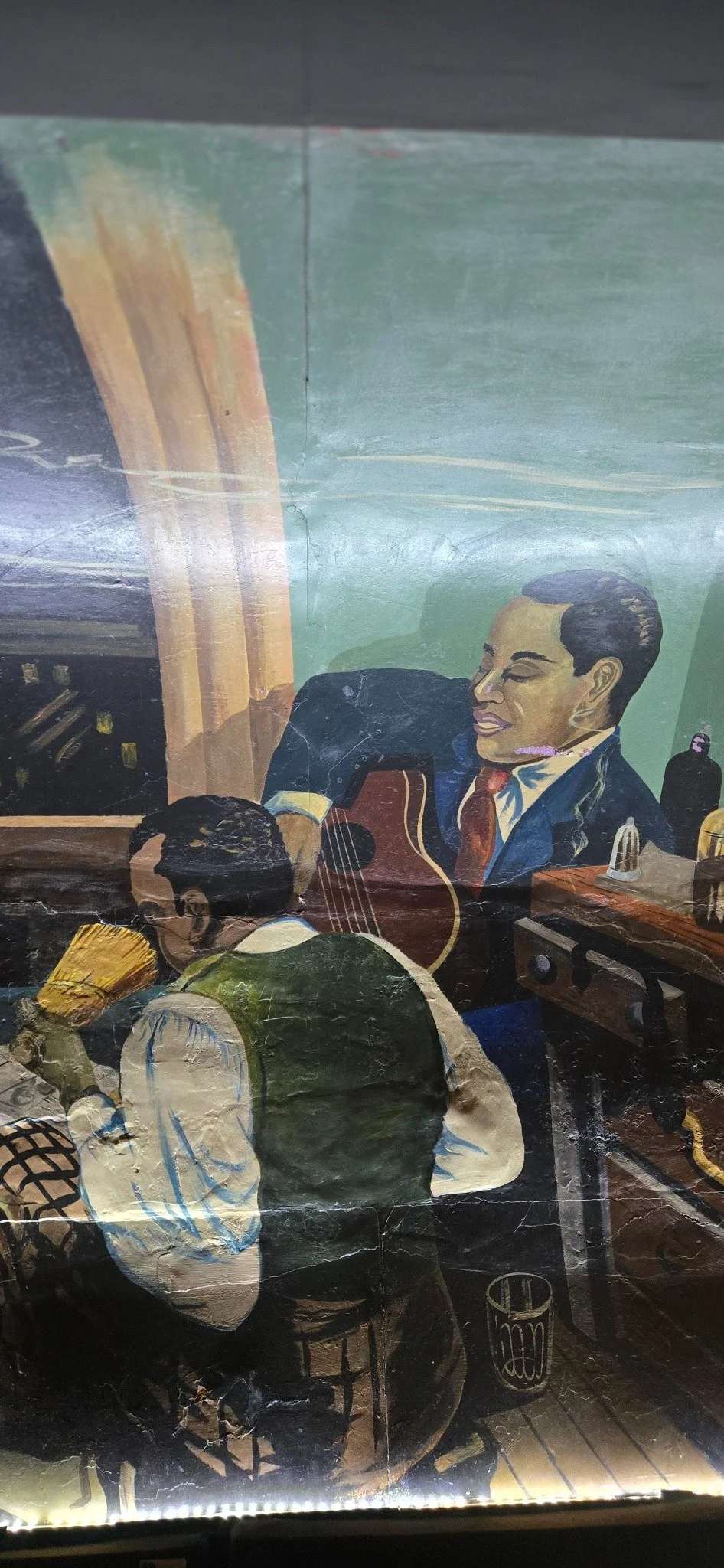
Before restoration
Cracking of varying length and depth, along with areas of loss and surface wear, had compromised the readability of the artwork. Some panels had shifted or lifted slightly, and earlier restoration efforts had begun to show signs of aging. Over time, these conditions disrupted the continuity of the composition.
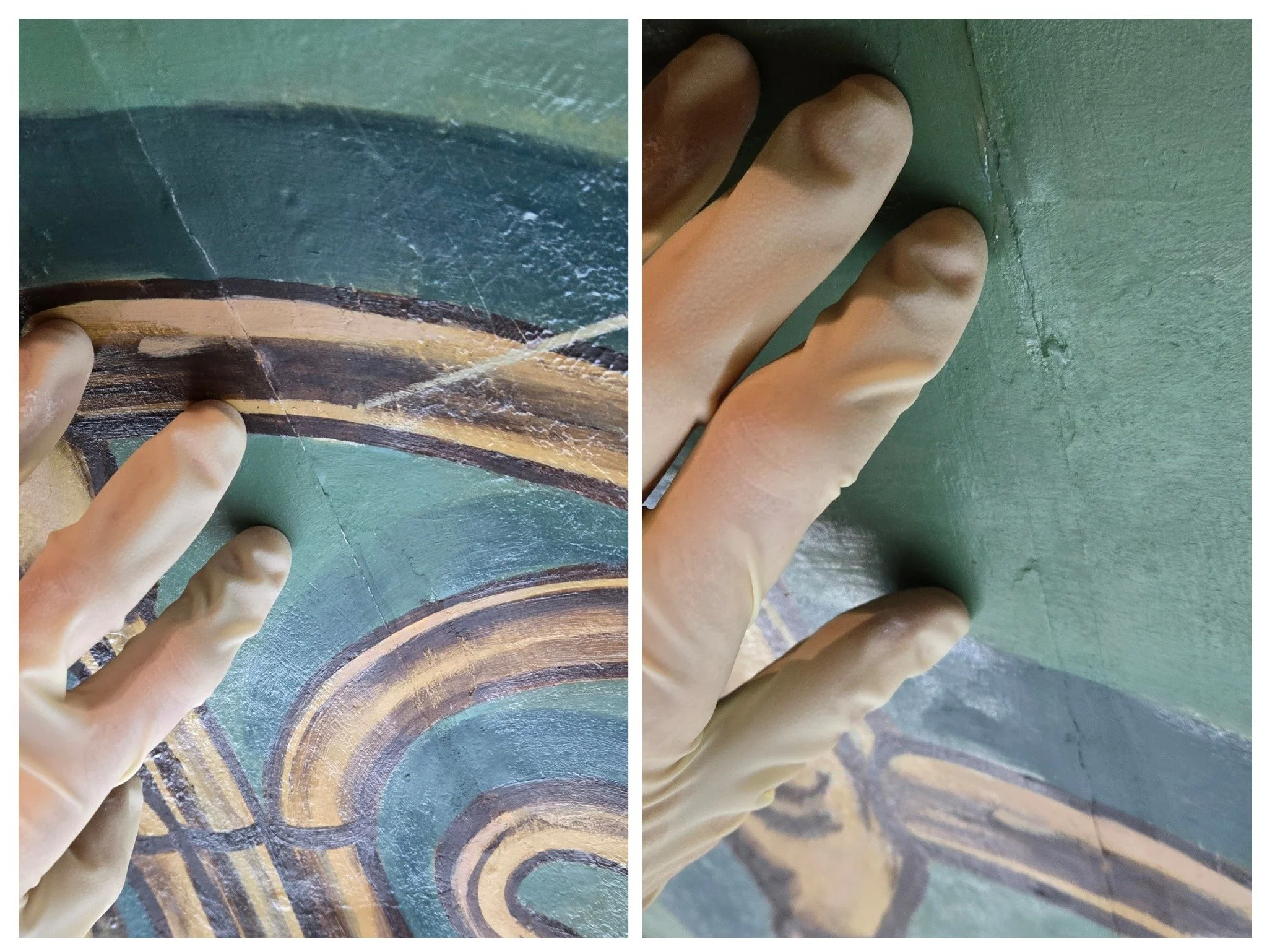
Stabilization and conservation work in progress
The work began with a careful stabilization of the surface with its underlying structure. Each area was approached with attention and restraint, allowing the repairs to support the integrity of the original material while preparing the image to be gently brought back together.
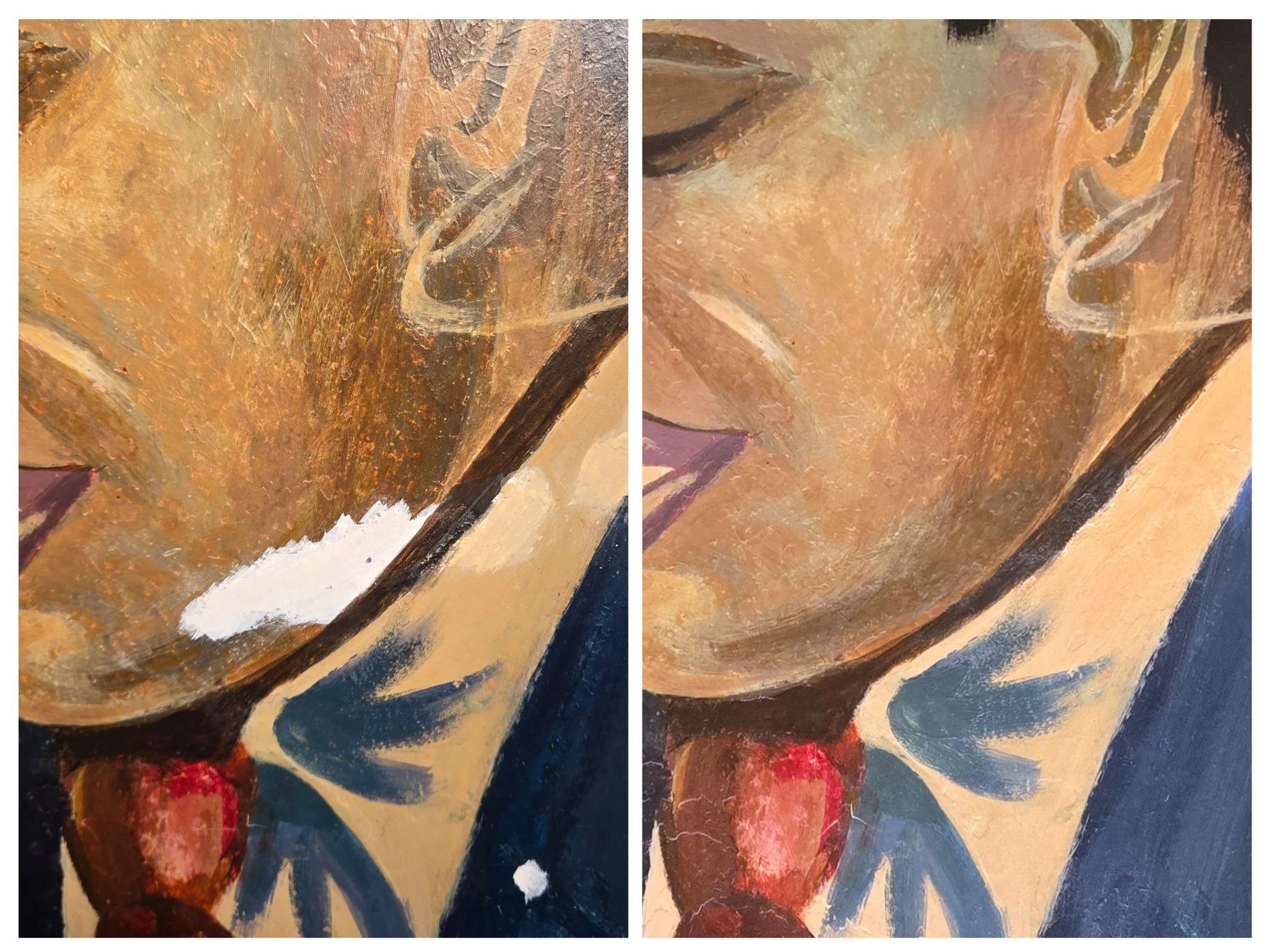
Before / After
Detail — reintegration and color matching
Areas of loss were rebuilt and brought back into the composition through careful color work, restoring continuity while remaining faithful to the original palette and gesture.
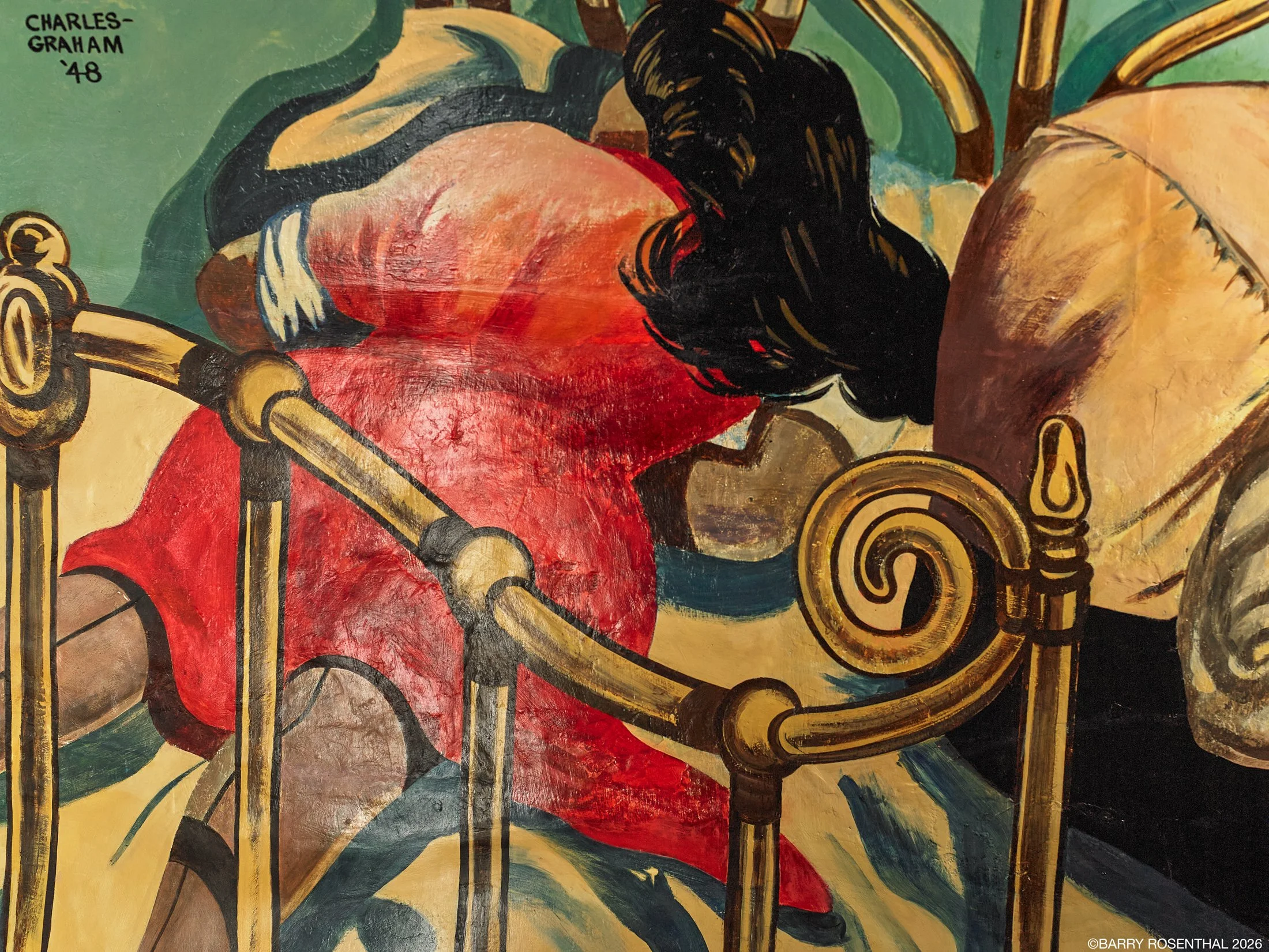
After restoration — surface continuity and color depth restored
With its different issues addressed, the mural regained its depth, rhythm, and visual clarity. The original composition could once again be experienced as a one better unified scene.
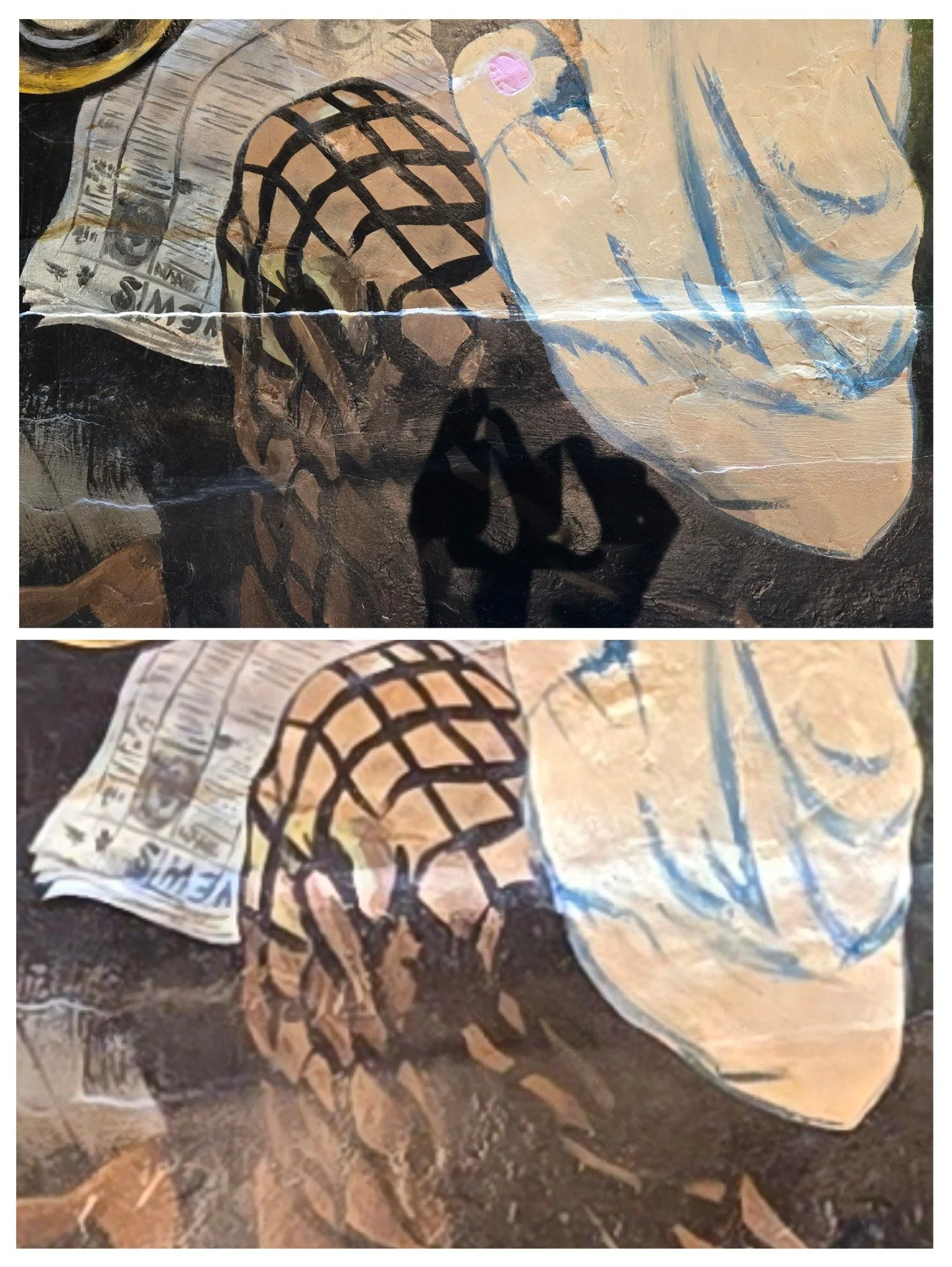
Detail
The sharp line of a panel crack was gently softened, restoring a sense of continuity and allowing the image to read as one unified surface.
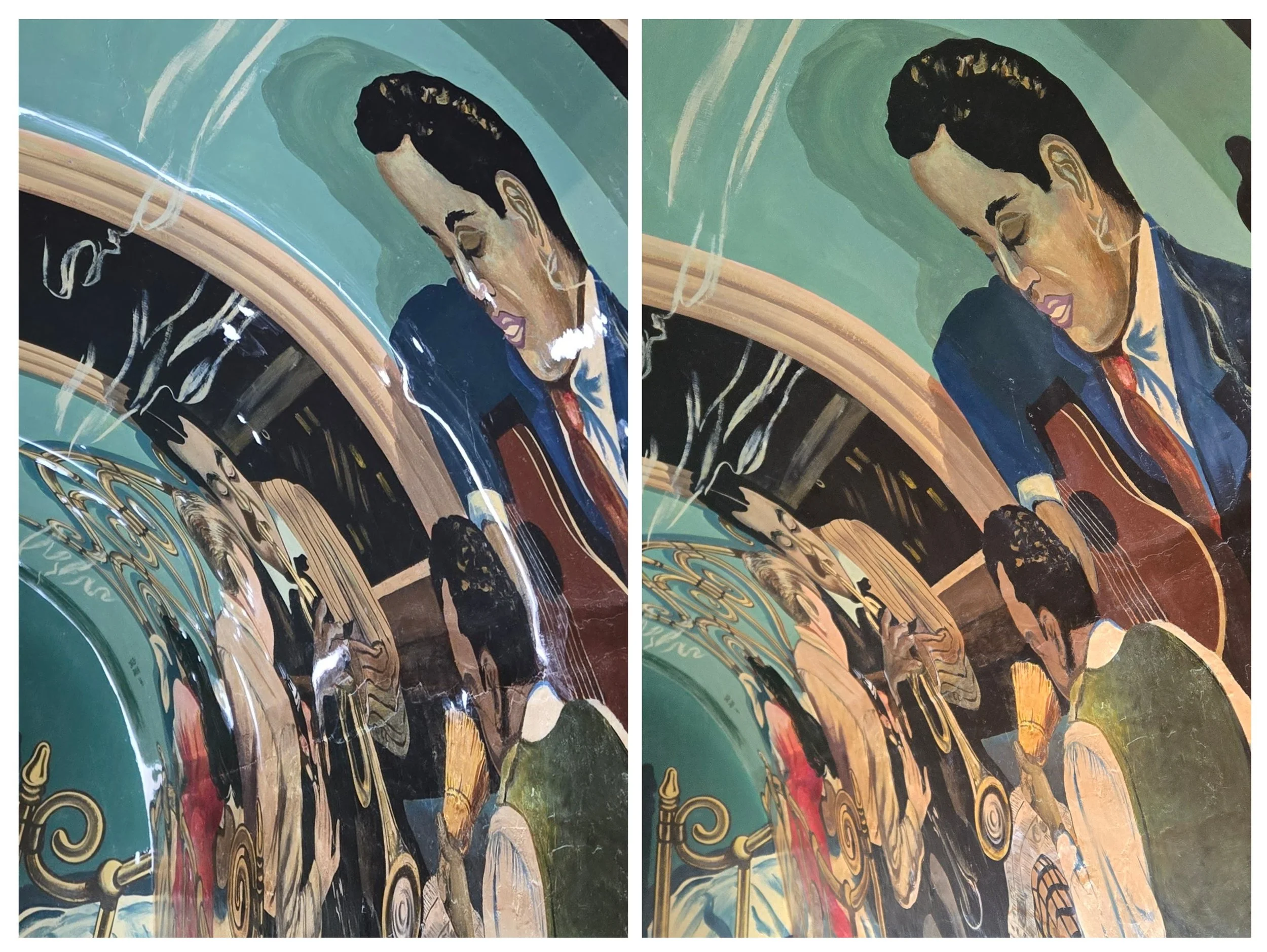
The surface of the mural was stabilized, clarified, and protected.
More than a restoration, this is a return—of presence, rhythm, and a lasting connection to the spirit of jazz.
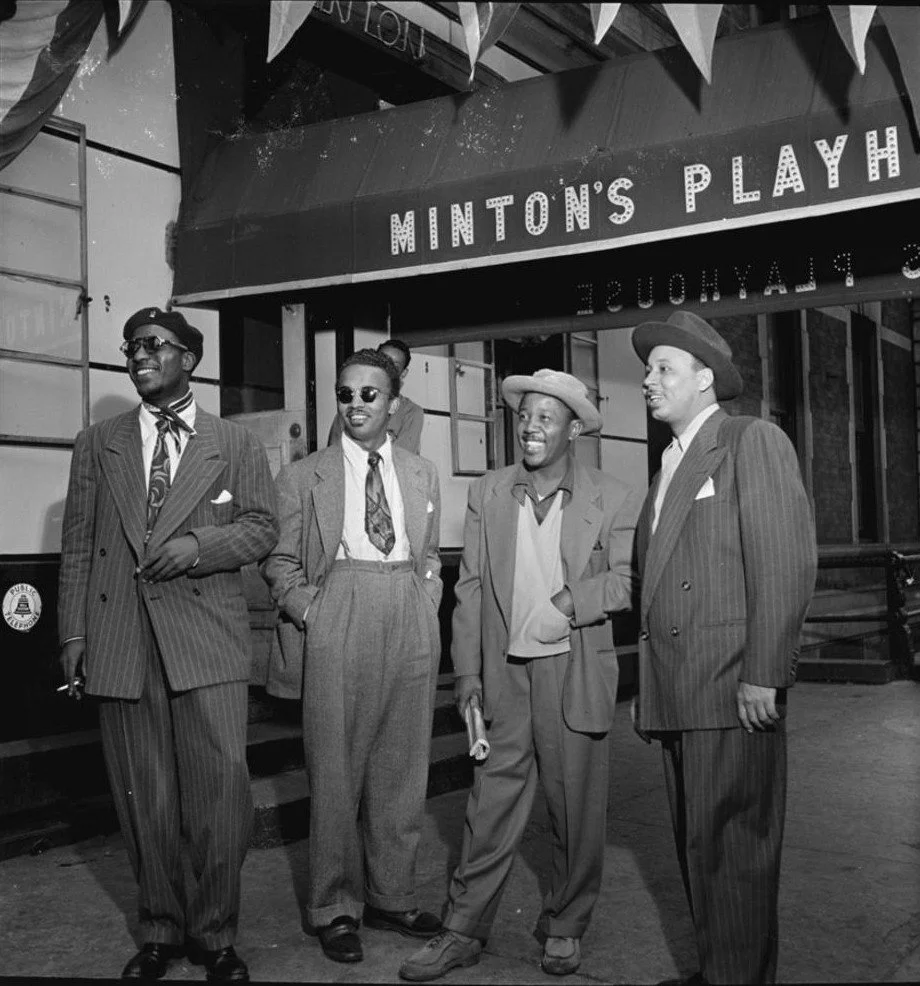
Portrait of Thelonious Monk, Howard McGhee, Roy Eldridge, and Teddy Hill, Minton's Playhouse, New York, N.Y., ca. Sept. 1947
By photographer William Gottlieb. Reference print available in Music Division, Library of Congress.
It will be such a pleasure to see it again when the space returns to life—with an audience present and music filling the room!